The Four E's of Big Tech
The grippy tentacles of Big Tech are all of these things: Longer, stronger, and reaching into our lives more than many realize.
While today's state-of-the-art of tech seems pretty normal and accepted, it would have absolutely been a cause for shock and alarm if it had somehow poofed into existence in its present form back in the late 2000's, before what I call the "modern era of tech".
You know the old saying about boiling a frog, right? That's an apt metaphor for how Big Tech became what it is today, without that many people noticing.
There are four key words that I call the "Four E's". They describe the four phases of your journey with most any example of Big Tech. Those phases are: 1. Enticement, 2. Engagement, 3. Entanglement, and 4. Extrication cost (yes, I like alliterations)
While these four words each describe a particular phase of one's experience with Big Tech, these phases do overlap a bit.
In this article, we'll describe those four words and how they specifically apply to a number of Big Tech companies.
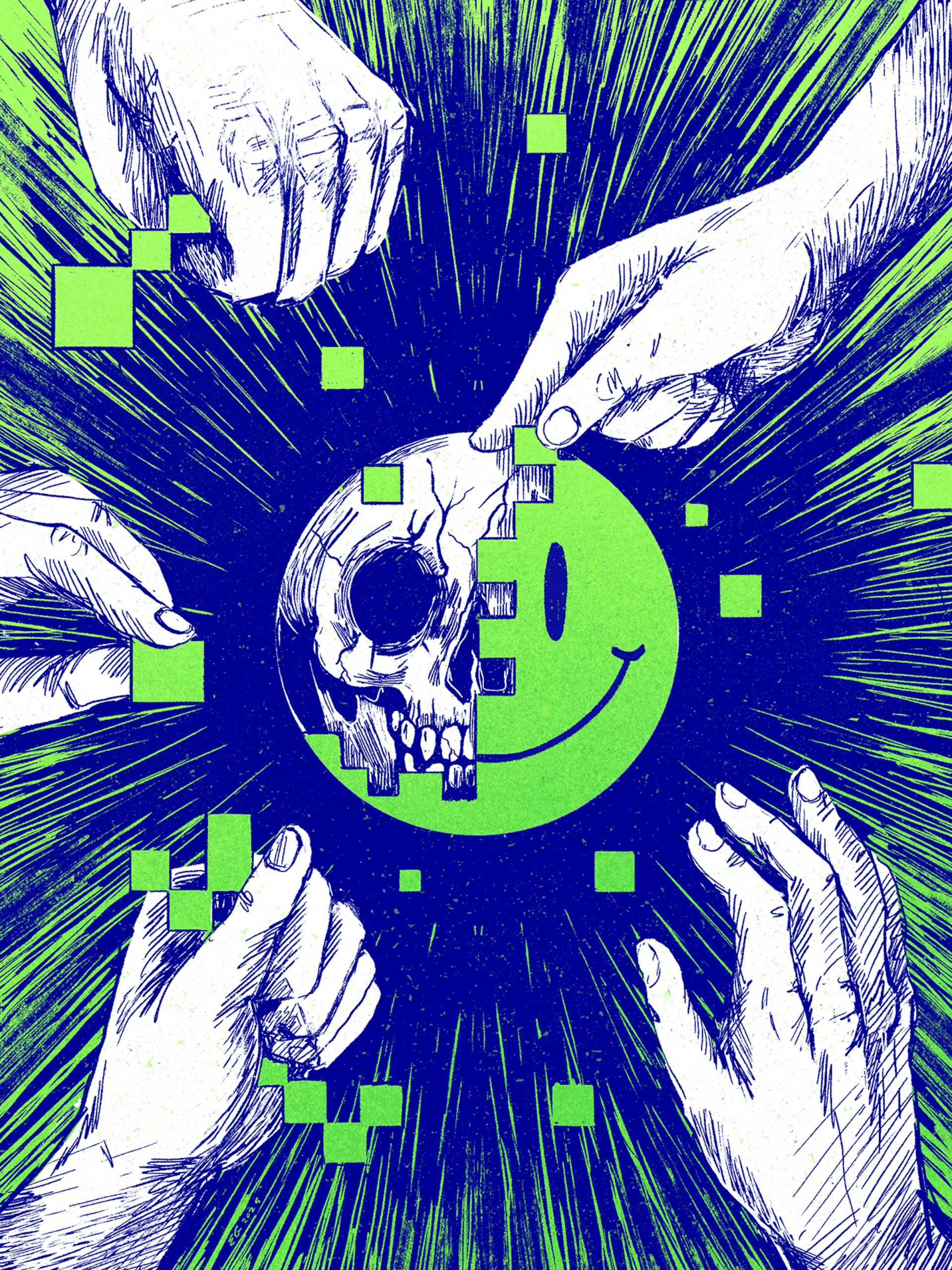
Enticement
Enticement is the pitch, the advertisement, designed to woo you into taking the offer, to come on board. This phase varies based on what the company does and who its customers are.
In this phase, the customer is still a free agent with no commitment and certainly not on board. Conversion* can be costly and difficult, so the company hoping to snag you really has to make their pitch compelling. Such ways include: Free full-featured trials. • Free non-trial tiers that offer useful, albeit limited, features. • Bundling a free product with the paid service. • Seamless onboarding.
* Conversion is marketing-speak for bringing a customer on board, signing them up, or "converting" them from a window-shopping lookie-loo to a paying client.
You might say that enticement is seeing the products in the window, beckoning you to enter the store. Conversion is you leaving carrying a shopping bag.
Some examples
Apple includes 5 GB of iCloud space for free with purchase of an iPhone or iPad. That's just enough to sync a modest number of photos and videos, getting you invested in the process and convenience, but certainly not enough long term. When you hit that 5 GB limit, then you either do without further syncing or your subscribe to additional space.
Google offered unlimited original-quality photo backups for years and people used it. Then Google put limits on that free tier, putting many people over.
Microsoft offers a free tier of OneDrive then aggressively cajoles the user, via Dark Patterns, into making maximum use of OneDrive. That 5 GB will soon fill up, requiring the user to buy more space.
Engagement
This is the result of a successful conversion. The customer is on board and paying the bucks. Now the customer will begin using the product(s) that brought them in the first place.
Once onboard, the company's focus switches to habit formation by driving engagement. That is, offering additional products and having features in their products to keep your eyeballs on them. Attention-grabbing features could include: Notifications, "streaks", and participation awards; • Algorithmic feeds and content tailored specifically to you; • Cross-device continuity (works on all your devices).
The more products a customer uses and the more deeply and longer they use them, the better it is for the company.
Some examples
Social media like Facebook, TikTok, and others use infinite scrolling to remove any signal to the user to stop or divert their attention elsewhere. And TikTok, especially, has cracked the code for algorithm-based recommendations.
The structure of Reddit doesn't lend itself as readily to infinite scroll, so they have introduced a boatload of "achievements" that are awarded to users as they engage with the platform. For people who crave the signs of approval these achievements provide, that's a powerful incentive to keep it up.
That leads us nicely to the third phase.
Entanglement
As time goes on, the customer becomes ever more deeply embedded in the company's products and services. While Big Tech talks a good line about interoperability, they are anything but. A person becomes entangled within the products and services they use when they become familiar with them and have comfortably integrated them into their workflow or lifeflow.
Big Tech products can be all-encompassing. They are certainly complicated, taking some time to learn and press into useful daily service. Some products, depending on their nature, especially if they're collaborative (the network effect), can entangle customers more effectively than other comparatively isolated products.
Some examples
Using a cloud file sharing company (Dropbox, OneDrive, Google Drive, etc.) among a group of people can be particularly entangling. People create folders, populate with data, and carefully share them out to just the right people, creating an intricate matrix of access and permissions. The very definition of entanglement.
Network effects: The more people that use a particular platform, the more valuable that platform becomes in terms of collaboration and avoiding extrication costs.
In short, the more entangled a person becomes within a company's ecosphere, the greater the power balance in terms of autonomy and freedom to choose shifts away from the user and to the company. Companies know this and will take advantage of that power imbalance with precision and savvy.
And that brings us to...
Extrication Cost
The last of the 4E's discusses the cost to exit/leave the company and, perhaps, switch to another company. That's what I call the extrication cost. This cost is multi-faceted, it's not just about money.
Think about leaving a platform like Google Photos, Dropbox, or Slack after years of use. Your data, your habits, and often your collaborators, are all tied into that system.
Extrication cost is how we term the hassles of offboarding (disentangling from a service):
- Time and effort needed.
- Exporting data in a compatible or portable format, which can be difficult. Services don't generally prohibit data exports, but they don't usually make it easy, either.
- Possible exit fees (yes, that's a thing with some cloud service providers).
- Cajoling your collaborators to transition with you, or at the very least, to accommodate and work around your leaving.
- Perform the onboarding process for your new alternative service, just as you did with the original one. Namely, setting it up and importing your data.
- Become familiar and comfortable with this new service, bringing it into your daily routine.
That's a hell of a list and could well be a ton of work depending on your particulars. Enough so that you might decide not to leave after all.
Software Subscriptions
The 4 E's are part and parcel of software subscriptions.
Back in the day, you'd buy your software on physical media and you owned that version in perpetuity. There was no expiration. Granted, it would eventually become obsolete as computers and operating systems evolved, but it never had a fixed expiration date. When the software maker came out with a newer version, you could buy it (usually at a discount) if you wanted to -- or not, if your older version still did what you needed. It was entirely up to you.
Today that practice is becoming a distant memory. Most of today's leading software titles are subscription-only. e.g. Microsoft Office 365 (Word, Excel, etc.), most Adobe products (Acrobat, Photoshop, and now even Photoshop Elements -- the "casual home user" version of Photoshop), most password managers, third party anti-virus products, and anything that's using the SaaS model (Software as a Service) -- that is, cloud-based software.
Some alternative products still offer perpetual license options. And by "alternative products", I don't mean lower quality or capability. There's a whole world of "non-leading" products that are perfectly good and useful for the majority of users. The only reason they aren't "first-place" is because they don't have the marketing muscle and name recognition that the major players have.
Many people simply aren't aware of these alternative products or that such an alternative universe even exists in the first place. e.g. A lot of people mistakenly believe that if they want to edit a document or use a spreadsheet then they need Microsoft Word and Excel or to edit a PDF file, they need Adobe Acrobat. I'm here to dispel that expensive myth.
Some examples of alternative products that offer a good experience and perpetual or even free licenses.
Acrobat alternatives
- Foxit Editor
- FlexiPDF
- PDF Reader Pro
- Nitro PDF
Office 365 alternatives
- Google Docs (free!)
- Libre Office (free!)
- SoftMaker
- OfficeSuite
- Ashampoo -- funny name to an English audience, but it's a legit company
Photoshop alternatives
- Affinity Pro
- PaintShop Pro
- GIMP
Any of these products would make a good alternative to the leading product in that sector for most people.
Many other product sectors have their alternatives as well. If you're tired of the subscription treadmill that most leading products use today, try searching for the name of your product followed by the word "alternatives". You may be pleasantly surprised.
Closing Comments
I've worked in tech adjacent occupations (tech heavy departments in non-tech companies) since I started professional work in 1980. I've watched Big Tech grow from its birth to what it is today. I'm pretty cynical about Big Tech, their motives, their gobsmacking eye-watering wealth*, and their effect on our world. But that doesn't mean I'm going to baselessly cast aspersions where they aren't deserved.
e.g. By the very nature of cloud services and the complexity of the cloud ecosphere, Entanglement and Extrication costs were bound to happen anyway. It's an organic feature of these services and doesn't always mean it was artificially engineered just to keep you trapped. But the effect is real and welcome (to Big Tech) all the same, and Big Tech certainly isn't doing anything to allay those facts and concerns.
* Of the ten publicly traded trillion-dollar-plus companies (what I call the "four comma club") as of 2025, only one is not in the tech sector. And that lone, non-tech company, Berkshire Hathaway (Warren Buffett's company) is #10 at 1.1t. They barely made the list.
Those trillion dollar companies have a total market cap of some 25 trillion dollars. This is what 25 trillion looks like with all the digits: $25,000,000,000,000. That's a lotta zeroes, y'all! This is why I'm not too concerned about Big Tech's well being. There's an awful lot of padding there to keep Big Tech comfy.
I guess the takeaway is don't be afraid to leave a tech provider that is taking advantage of you. Will your one (or few)-person boycott make a difference? No, of course not. Will enough people bail from such companies that so that it could make a difference? Highly doubtful, if history is any indication.
But will you personally feel better? Almost certainly so.