Tyranny of Subscriptions and Cloud Devices
Back in the 1980s, 1990's and even early/mid 2000's, you might be laughed-off the stage if you suggested that people might one day subscribe to things that, at the time, were wholly owned by the people who used them.
Time was you'd go to the store, buy a piece of software (a game or business software), a music LP or CD, or a movie on VHS or DVD. It was yours. You could do pretty much whatever you wanted aside from making copies and selling them.
Ah, those were the days. Sweet summer children, not yet sullied by what would come in the later 2000's, 2010's and ever more so today.
Abandoning Autonomy
Actually owning what you paid money for was great. It was predictable. You paid your bucks, got the software, music, movie, or whatever, and your relationship with the seller regarding that particular item was over. No different than buying any other consumer good.
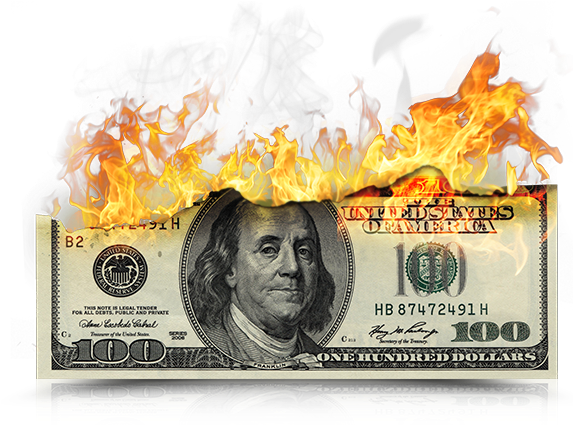
Money to burn
If it was software, like say, Microsoft Word or Excel, you might get an upgrade, often at a discount, when a new version came out. But that was your choice. There was no imperative to upgrade. You could use that crusty old version basically forever if you wanted to. And if it did what you needed then that's often exactly what people did.
It was up the manufacturers of such software to entice you into upgrading by offering flashy new features they hoped you'd want. That was true of office software, games, and other software.
But now, many of the more popular software packages are being heavily pushed under the subscription model. Some of them might be available as a one-time perpetual license, but you'd have a hard time finding those links. And some products, like Adobe Photoshop are now subscription only.
Once you've acquiesced to subscribing to a particular software product, you are far less likely to unsubscribe, even if there's a price increase. Manufacturers know this. So the metrics of the relationship change from primarily benefiting you to benefiting them.
Here's the two models:
- Purchase model: Software makers must make a fresh appeal each time they release an upgrade. They do this by offering discounts and introducing new features that are actually useful and compelling. This is to your benefit.
- Subscription model: You are already paying for the product on a monthly or yearly basis. The manufacturer technically doesn't have to do anything to keep collecting your money. So instead of developing compelling features that you might like, they're busy developing features and methodologies that capture and drive your engagement, up-sell ancillary services that you almost certainly don't need, and whatever else they can to grab more of your money. This is to their benefit.
The subscription model has been wildly successful for the software industry. That success is on your back, dear reader.
Why was it so successful? The method of planning!
Consumers are tactical. They focus on the here and how. What is most convenient today, this week, this month. Consumers don't usually plan small purchases or their consequences far into the future.
Companies that sell subscription-based services are strategic. They focus on the long game by analyzing prevailing trends and gently tweaking their models to best capitalize on them. They are patient. They don't always succeed but when they do it can be a windfall. Subscriptions, as a model, was and is a windfall for many software companies -- and for other companies as well, such as streaming TV providers.
You may think that subscribing is cheaper. That is almost universally false. The only thing "cheaper" about subscribing is not paying up-front at a product's full price. But considering that as actual savings is illusory. No company will leave money on the table when psychographic data dictate how to squeeze every penny they can from their customers. Where the biggest money comes from isn't the delta between the full purchase price and an ongoing subscription (though it ain't peanuts), but rather from the additional customers that subscribe (because no full-price payment up front) and a customer's near-guaranteed renewal each term.
The Sound of Music
In the case of music, back in the day, we all listened to the OG of "streaming services" -- broadcast FM and AM radio -- often while in the car or to find something new. That's something that today's Gen Alphas might not understand (ok, boomer). If we liked a song or artist we might buy their LPs or, later, CDs, giving us the freedom to listen anytime and anywhere with no further cost or complications.
In other words, with all the above, we owned the item. We didn't rent it. We didn't borrow it. We owned it. Forever.
Nowadays, most music is "rented" through services like Spotify -- very few people own physical media, though LPs are regaining popularity among a specific collector class. The idea of having a home stereo system, hitting "play" on a portable music player, or even a player app on your phone, that plays locally stored music is completely foreign to most people today.
Yes, you can download music from Spotify to play when there's no internet access, like on an airplane. But that music is still rented and DRM constrained. If you cancel your Spotify subscription those downloaded tunes become unplayable. You can thank encryption and the DMCA for that.
But at least with music, you can generally get along with a single streaming provider, like Spotify or Apple Music. The music streaming ecosystem went through their pains, too, before finally settling into reasonably stable and convenient existence.
But the TV streaming world is still a hot mess, embroiled in constant disruption, never seeming to coalesce around a stable offering for their hapless and frustrated customers. Maybe one day it will.
The Financial Meltdown Pivot
The 2008 financial crisis kicked off a time of reckoning for many sectors of the US and global economy, harming some and turbocharging others. One of those turbocharged things is the streaming service model, part of what I call the entertainment industrial complex or simply "Big TV".
The timing was perfect because the late aughts was when people finally started getting decent high speed internet access at home. Prior to that, a critical mass of people still had slow DSL, or worse, dial-up internet access. By the early 2010s, enough people were serviced by much faster cable or fiber internet, so that a traffic-heavy service, like streaming TV, was possible.
This made cutting the cord (cancelling traditional cable TV) not only possible but desirable for millions of households. At the time, there were only a few major players in the streaming space that, together, held a pretty vast catalog of TV shows and movies. For consumers, this was a golden time. You could more or less replace cable TV* easily costing over a hundred bucks a month with a couple of streaming services for $25. For a nation just emerging from a financial crisis, that was a welcome savings.
* With the notable exception of live sports programming. This was and continues to be difficult and expensive via streaming. Sports fans are really getting screwed these days.
That's many, many billions of dollars of potential lost opportunity every year as people cut the cord. As mentioned in greater detail in my deep dive Cutting the Cord article, there was no way Big TV was going to allow that.
So we arrive to where we are today: A highly fragmented, balkanized streaming TV landscape. (Yes, I'm prone to using tautologies). It's getting harder to watch everything you want without subscribing to half a dozen or more streaming providers.
A Confluence of Corporate Conveniences
Today, an unholy merger of everyday devices and the subscription model is upon us and growing. 'Splain that to me Lucy!
Here's what that means:
As I wrote in detail in my Internet of Things (IoT) article, an increasing number of ordinary everyday devices* that we've all been using for decades are starting to include cloud-connectivity.
* Toaster, thermostat, refrigerator, coffee maker, dishwasher, stove, oven, door locks, tooth brushes, laundry machines, kids toys, and countless other such everyday devices.
This newfangled cloud-connectivity introduces new and presumably useful (but dubious) features. Some of those features may be entirely new and never-seen such as getting an alert on your phone that a package was detected on your front porch -- and that you'd best bring it inside lest a porch pirate steal it.
But increasingly, this new connectivity shifts the way we control the device. We are starting to see everyday devices like a thermostat, lawn sprinkler controller, security system, etc., losing their manual local control panels (no more buttons, switches, or even displays) to being accessed and controlled only via a cloud-connected (and often subscription-based) phone app.
This is all pretty damn concerning.
The upshot of all this and the main point of this article is to bring to fore the real purpose of all this IoT and subscription paring. This is all about driving engagement and consumer capture. It's about companies owning and dictating your experience in ways never before possible. The key benefit for manufactures in doing this is the ongoing consumer subscription payments that's shoveling well over one hundred billion dollars annually into their coffers.
When a device requires a cloud connection to function, that introduces a number of consumer-hostile things.
- Monthly or annual subscription costs that can easily run into the hundreds of dollars per year.
- Forced upgrades: Manufacturer discontinues supporting a perfectly operational product by reducing (sometimes key) functionality or even bricking* the device.
- Inability to control the device even from inside your home if internet access is interrupted.
- Introducing a significant risk of cyber-attack from internet-borne threats due to poorly designed or no security.
* Bricking is when a device permanently stops working either from an unrecoverable software bug or, increasingly, by the manufacturer when they no longer wish to support the device. Bricking is an unethical form of coercive upgrade, increasing manufacturer revenue.
Here's a short list of real life examples of what I'm talking about in the points above.
1 > A client of mine recently had a new (kitchen) oven installed to replace a malfunctioning one that could not be repaired. After installation, she could not figure out how to use an advertised delayed start feature. Turns out the oven required a wi-fi connection and an account on a cloud service run by the oven's manufacturer. Then she needed the oven's app on her phone. All this utterly unnecessary complexity just to use a simple feature that should have been available using the oven's existing local control panel.
2 > Spotify (the music service) just under three years ago, at the time of this writing, released a gadget called the Car Thing that lets you stream music in your car. The product cost around $100 or so -- and that's not counting the Spotify subscription. Spotify recently announced they would drop support, actually brick the device, and offer no refunds. After a loud, vociferous chorus of complaints, and the threat of a class-action lawsuit, Spotify reluctantly offered refunds.
3 > BMW some time ago wanted to offer seat heaters in certain car models as an option. OK, fine, car makers do that. But because it cost BMW more money to build two different versions of the seat (one with the heater and one without) than it did to just include the heater in all seats for those models, BMW decided to offer the heater function as a subscription to the owner at a cost of $18 per month.
Let that sink in for a minute, I'll wait... Your costly BMW, already having all the required parts and circuitry to warm your tushie, being disabled by software, unless you fork over $200+ per year. After loud complaints and richly deserved bad press, BMW relented and activated the seat heater for free.
4 > Tesla is well known for using the subscription model to enable, through software, certain features that are already built into their cars. Depending on the model, you can pay extra to unlock such things as additional driving range, faster acceleration, and full self driving (which still isn't really working). And these upgrades aren't cheap, either, costing as much as $20,000 for all three features. Features, I stress again, whose underlying technologies are already present in the car.
5 > Makers of home automation gadgets that promise you Jetsons-esque control over multiple devices in your home are rife with complaints of discontinued support (sometimes requiring new equipment), poor connectivity, escalating subscription prices, buggy software, security issues, and other problems.
There are countless more examples illustrating the disadvantages of subscription-tied IoT garbage.
Why am I focusing so much on the bad side of all this? Because the industry itself is s-s-so busy hyping only the positives -- or what they are claiming are the positives. They certainly don't need my help for that. But nobody other than tech pundits like myself are discussing any of the manifest negatives.
A New Trend is Evolving
More and more people are growing weary of the subscriptification* of everyday life as described above. So what are people actually doing about it?
A few things...
* OK, that's pretty torturous, I know. It'll never be the next enshittification.
First Up, Music
New subscriptions to music services have slowed. In wealthier markets like the U.S., there is increasing subscriber churn and some outright cancellations. This is especially true of Gen Z, the cohort of mid-teens to late 20s (in age) as of this writing (2026).
Vinyl records are having renaissance these days -- not just "a moment", but a real renaissance. Sales of LPs in 2024 grew to $1.4b, according to the RIAA (Recording Industry Association of America). That makes 18 consecutive years of growth for vinyl. In 2023, vinyl sales actually surpassed CD sales for the first time since 1987!
This phenomenon can be chalked up to these two big reasons.
1. Ownership
Owning something conveys a sense that renting never could. There's a permanence to ownership that connects the item to the owner, creating a stronger bond, commitment, and appreciation for the owned thing.
Renting, on the other hand, provides little of those qualities. We aren't truly invested in the item, there's no permanence. It's all transactional and ephemeral. When the rental period ends then our relationship with the rented item is over.
This psychological phenomena are studied and real.
There's also the practical aspects to ownership. You pay one time for the item then you own it until, or if, you choose otherwise. e.g. sell, give away, or discard.
2. The Experience
At least in the case of vinyl LPs, the rituals surrounding the listening experience is paramount to enjoyment in a way that streaming music, and even CDs to some extent, cannot convey.
That experience includes having 12x12 inch album art, possibly even a gatefold album with even more room for art, liner notes, lyrics, photography, essays, and more. Placing the LP on a turntable for that first play was an occasion. Carefully cleaning records and refiling them while the next record plays was also meaningful.
Likewise, if you have/had a decent cassette deck, then making a mix tape was a form of art and if given to someone else, a show of love or friendship. You just can't replicate that tactile experience with a playlist that you emailed to someone.
It was all so immersive.
n.b. This was just a discussion of the traditional rituals surrounding analog LP records and not about whether they sound better than CDs or not.
On the other hand, with CDs, the jewel cases are far smaller, severely limiting the detail and impact of cover art and there's far less room inside for additional printed content. And for subscription music? Bupkis. The song plays and that's it. Zero ownership. Zero tactile experience. Zero ritual and romance. A big fat zero.
Gen Z has also resurrected interest in portable music players, like the iPods from years ago. Suddenly, these old fashioned, offline devices are hot again. There's dozens of models to choose from today.
While these music players don't offer the same tactile experience as playing an LP on a turntable, they do facilitate media file ownership with no subscription costs or associated headaches.
Next Up, TV
As streaming and subscription fatigue increases, Gen Z'ers* (again) are showing renewed interest in physical media, especially for movies. While DVD and Blu-ray sales are still declining, that decline is slowing appreciably. A lot of content is still being produced on physical media, especially movies and TV shows that have completed their runs, and some people are buying them rather than rely on that content being available for streaming for however long it takes to watch the entire series.
Ardent movie buffs also tend to collect a lot of films. In what may seem like an irony, heavy film consumers -- including some who also pirate content -- tend to purchase more movies than casual viewers simply because they consume more overall.
I'm not advocating for piracy here, just simply mentioning that it's one of several methods film aficionados use to obtain durable, non-subscription tied, non-expiring content. Often when content isn't available any other way. e.g. not for sale, rent, or via streaming.
Subscription services aren't going away. But people are beginning to (re)embrace physical, permanent ownership. How far this goes, who can say?
* Gen Z is the vanguard, of sorts, for some of today's reawakening to physical media ownership.
Final Comments
For you boomers (like me), Gen X'ers, and maybe early Millennials out there, you might remember when tech was actually exciting and fun. You may have had a home stereo system and a decent collection of music. If you were a tech geek like me, you enjoyed walking through Radio Shack and other electronics shops.
In the early 80s, I loved visiting the electronic and audio shops in my city. I worked at one of them for a while, helping people select the right stereo receiver, turntable, speakers, tape deck, and everything else. And on a few occasions, I delivered and set it all up for the customer. What a magical time that was.
From the perspective of magical, cool things, the internet ruined all that. While universal internet access has been a boon for many reasons, it also facilitated this dark side that we're all pretty familiar with. One of those being the enshittification of so many things today.
I'm just trying to shine a fuller light on this growing insidious sector of the tech economy -- subscription services. My aim is to help folks make wise, informed decisions about which household items they cede traditional control over, to an app-tied, subscription-tied, cloud-integrated world.
Generally, the less you cede to this, the better. I can help you make an informed decision by discussing the pros and cons of whatever new device or appliance that you are considering.
Read my deeper dive on IoT (Internet of Things) devices here.