Laser Printer vs. Inkjet Printer
Printers can be pesky, troublesome, and expensive to operate. And there's no one single type of printer that is best at everything.
Most people buy an inkjet printer without really considering the differences between laser and inkjet technology and which one would be the better choice for their circumstances. And who can blame them? It’s not like the printer makers help with the decision.
Here we'll discuss the pros and cons of each to help you make an informed decision about what to buy.
Brief description of the two types
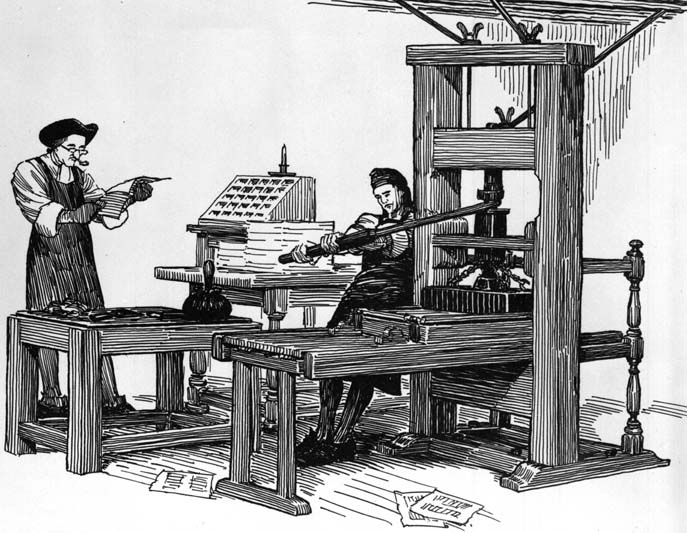
Gutenberg press in operation
Inkjet printers use liquid ink of several different colors and black. The ink is sprayed as microscopic droplets onto a sheet of paper by a print head that rides back and forth on a rail inside the printer as the paper slowly advances forward.
Laser printers use dry toner (powder) in three different colors and black. Some lasers are black only. Imagine colorful or black baking powder. That’s what toner is like. Laser printers don’t have a moving print head on a rail like inkjets do. Instead, toner is applied to the paper via a rotating metal drum that covers the entire width of the paper and is then fused at high temperature to a sheet of paper. The drum rotates as the paper moves forward.
Pros and Cons of each type
Since lasers and inkjets use completely dissimilar printing technologies then it figures that each will have their pros and cons. So we’ll go over all that here.
Laser Pros
- Cheaper to operate. Toner generally costs less per page than ink, sometimes considerably less.
- Much faster. Even the slowest lasers are faster than inkjet printers. If you print a lot, you’ll spend far less time waiting.
- Printed sheets come out completely dry, no wet ink to smear. Similarly, printouts won’t smear if they become wet later on for some reason such as from a splash of water or other liquid.
- Text is crisp and sharper than inkjet. Toner is dry so it doesn’t bleed into the paper’s fiber.
- Toner cartridges last longer before you have to install a new one. Most toner carts yield in the low thousands of sheets whereas most inkjet carts yield in the low to mid hundreds. That means less cart swapping.
- A laser printer can sit unused for months without clogging up.
Laser Cons
- Costs more up-front to purchase, especially for color units with a scanner.
- Not really intended for photo quality printing. Lasers can print photos, but not as well as inkjet printers. That is changing, however.
- Some models have additional maintenance requirements such as replacing fuser rollers and drums. Some newer models incorporate these parts into the toner carts themselves, reducing maintenance.
- Lasers, especially color lasers, tend to be larger and heavier. But once in place, that’s not a big deal. It's not like printers are moved around a lot.
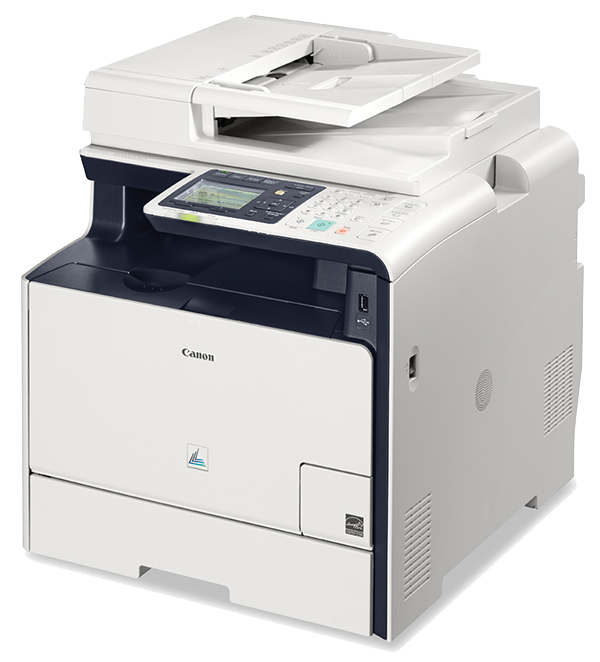
Canon Color Laser w/Scanner
Inkjet Pros
- Cost less up front to purchase.
- Produces excellent photos when using photo quality paper.
- Most are smaller and lighter than laser printers.
- Fewer consumable internal parts.
Inkjet Cons
- The biggie: Ink is expensive and refilled carts often won't work due to prohibitions built into the printer's firmware. However, there are ECO tank options that mitigate this. More about that below.
- Inkjet printers can clog up if they aren’t used regularly, especially during drier winter months. To help prevent that, print a small wallet-sized color photo once every week or so that exercises all the colors.
- Lots of (expensive) ink is wasted during print head cleaning procedures.
- Text is not as sharp because the wet ink bleeds into the papers fiber a little before it dries. Think what would happen if you wrote a note on tissue paper using a Sharpie. Not as extreme, but that’s basically what happens.
- Tend to be more poorly constructed.
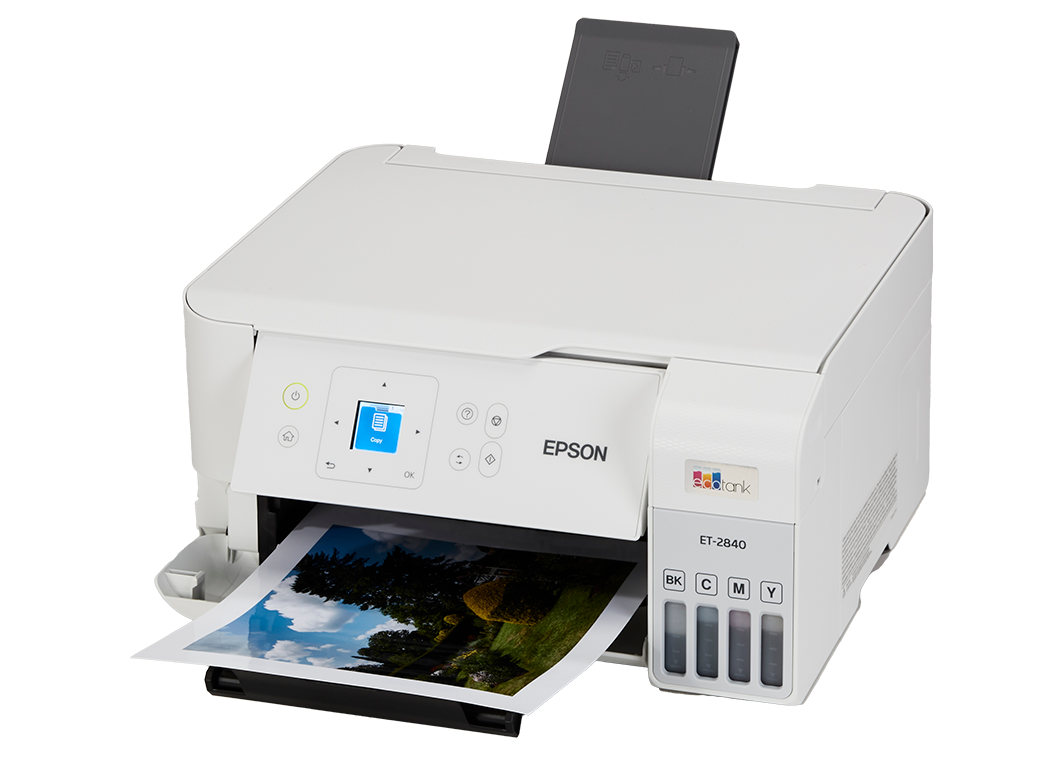
Epson Eco-Tank Inkjet Printer w/Scanner
AIO -- All In one (Print, Scan, Copy, Fax)
All but the very cheapest inkjets have a scanner built-in so you can scan, copy, and maybe fax. In keeping with low prices for inkjets, these scanners are painfully slow and some lack a document feeder, which means you must scan one sheet at a time laying it directly on the glass.
Mid to upper-end inkjet and laser printers also include a scanner. These scanners are a little faster and usually include a document feeder that can handle a small stack of originals. Lasers, especially AIOs, have full networking capabilities so that it can be easily shared between multiple computers. Higher end inkjets have this feature, too.
Third party refills
Using refilled ink or toner carts is generally not recommended. My experience, backed by Consumer Reports magazine, show that refilled carts don’t perform as consistently well as genuine manufacturer ink. That’s not to say you’ll always have a bad experience, but satisfaction rates are a bit lower for third-party refilled ink.
Using refills may be for naught anyway -- many (most?) inkjet printers today disallow using 3rd party refilled carts.
But regardless, and this is key, if you are buying ink often enough that the cost difference between genuine and refilled ink is significant, then your printing volume is already high enough that you should be using a laser printer instead.
So, considering all the pros and cons presented above, you should figure out which technology is best for your circumstances.
"ECO" printers -- A cheaper way to own an ink jet
Some brief history first, as is my wont... Inkjet printer manufacturers' business model has been to sell the printer for less, sometimes at a break-even price or even a loss, then make it up with ink sales. This is why many printer brands include technology that makes it difficult or impossible to use 3rd party refill ink.
It's a form of the old razor and blades business model where the manufacturer sells for cheap, or even gives away, the headlining item (the razor handle) then makes all the real money on the supplemental consumable sales (the blades).
Now there's a better way.
After 30-some years, the printer manufacturers have finally heard your cries. Some manufacturers have introduced so-called "eco" or "super-tank" ink-jet printers. These printers include extra large tanks built-in that are designed to be refilled by the user with bottled genuine manufacturer ink that comes with the printer.
Yield per bottle can run to several thousand pages. And replacement bottles aren't very expensive, either. Obviously, without those expensive supplemental ink purchases to rely on, printer manufacturers have to charge quite a bit more for the printer up front. But it's still far cheaper in the long run if you do a lot of printing, e.g. hundreds of pages per month.
Why did the printer manufactures start offering consumer friendly products such as this? I'll speculate these several reasons:
- Printer manufacturers were starting to realize how much people hate and despise printers and so quit buying them. The need for printers is waning these days as more things are done online and data stored digitally. Bad for business.
- Some people were simply buying inexpensive new printers instead of the super expensive replacement ink. That wrecked the razor and blades model that printer manufacturers were relying on. Even worse for business.
- Printers break easily and are generally not repairable. Well, the cheaper ones anyway.
- All those printers that people discarded (due to the preceding points) into landfills by the millions were getting unwanted attention from environmentally-minded regulators. Manufacturers today are being held to higher account and responsibility, especially in the EU, regarding the total lifecycle of their products. And as consumer technology goes, printers are comparatively large and heavy, increasing that liability. Legislation is making it more expensive for manufacturers to produce products that end up in landfills especially before their natural life ends.
For these and probably other reasons, we're seeing more consumer friendly eco/super-tank options today. This is good news!
I still don't generally recommend inkjet for all the other reasons I gave above. But if you print a lot, especially photos, and must have an inkjet, then choosing an eco/super-tank model can save you a lot of money.
What brands to buy and to avoid
What brand should you buy? As far as print quality and features go, printers are pretty much commodity devices these days. They're all more or less as good as each other. Sadly, one of the main differentiating features is how enshittified the printer is.
There's 8 or 9 popular printer brands, some of which market mainly to business users and thus aren't household names. But four of those brands also have a "home user" division.
Here is my order of preference among those four:
- Brother -- Minimal restrictions, drivers are good, the least enshittified.
- Canon
- Epson
- HP -- The most enshittified. I personally would never buy or recommend HP.
Not every printer from the these four manufactures are necessarily all good or bad, but if you prioritize shopping for brands as I've listed them, you're more likely to have a good experience.
Decider
If all the above pros, cons, and other verbiage weren’t as helpful as I’d hoped, then use the following points to help decide.
- If you print more than a ream a month (500 sheets) then you need a laser printer, period. Inkjets are not intended for that level of printing, regardless of what the manufacturer suggests. You’d spend a fortune on ink, assuming not an eco tank model. Between 200 and 500 sheets a month? It could go either way. If you print a lot and color is important (but not necessarily color photos) then a color laser is indicated.
- If printing photos yourself at home is important then you need an inkjet. However, instead, you might consider using one of the numerous online photo printing services. Results are usually better and they costs less, especially for 4x6 prints which are quite inexpensive especially at higher numbers, e.g. 50 or more.
- If both 1 and 2 are true, then you need both inkjet and laser. It may sound extravagant to have two printers, but it's really not. In this case, you can get by with a black-only laser (they are cheap) and do your color printing on the ink jet.
- If color printing (text or otherwise) is unimportant, for example, you mainly print documents and email, then a black-only laser may be indicated. They’re as cheap to purchase as inkjet printers but have all the advantages of laser in terms of cost, speed, and convenience.
More about online printing
If you print a lot photos then you may do better by using an online photo printing service. Some offer 4x6 prints for around 20 cents each, which is often less than printing them yourself when you factor in ink costs and photo paper. Most offer deeper discounts when printing in higher quantities, say 50 or more. Each vendor is different, check their prices.
It’s also far less hassle especially if you have a lot to print. Just upload your photos and that’s it. The online company will mail you the prints. Or if you use a local retailer like Walgreen's, CVS, Walmart, etc. then you may be able to pick them up in person, sometimes on the same day.
Conclusion
I ask all the above questions when determining what kind of printer to suggest to a client. In general, I prefer lasers unless there’s a compelling reason to buy an inkjet -- like printing photos at home.